
What Is The Vagus Nerve?
10 surprising fun facts about the vagus nerve and its enormous impact:
The vagus nerve is one of the most fascinating nerves in the human body and plays a central role in our well-being.
Its influence reaches far beyond what many people would expect.
In this blog post, you’ll discover 10 surprising facts about the vagus nerve that will give you a new perspective on your body, your well-being—and ultimately your quality of life.
1. The Wanderer in the Body
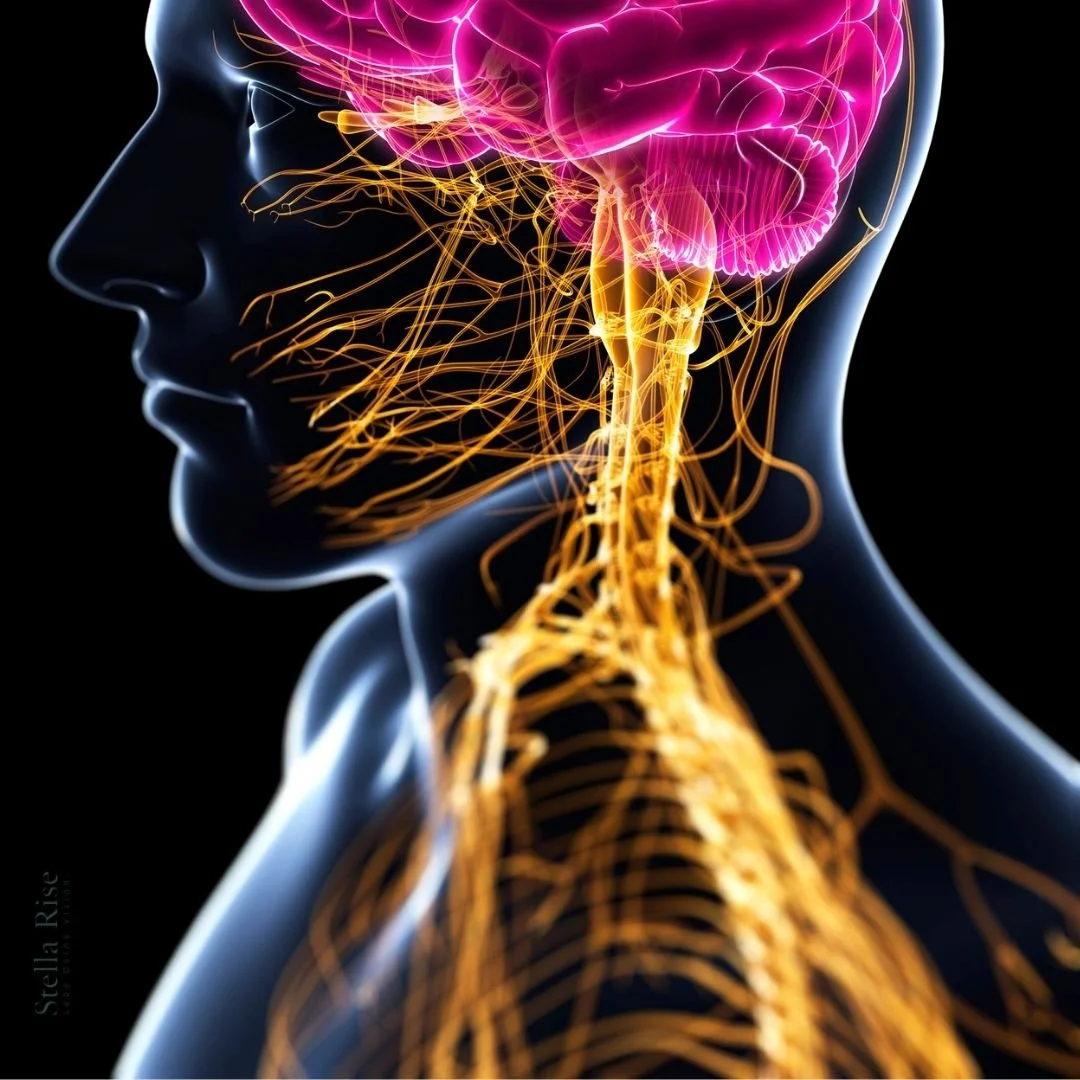
The name “vagus” comes from Latin and means “wanderer.”
That perfectly describes the path of the vagus nerve, because it travels throughout the body—from your brain to your most vital organs, like your heart, lungs, and gut, and even to some muscles in the face.
2. Your “Rest-and-Digest” Nerve
The vagus nerve plays a major role in the parasympathetic branch of your nervous system—the part that helps you relax and recover.
When you breathe deeply into your belly and activate your vagus nerve, you support your nervous system in shifting from “fight or flight” mode into “rest and digest” mode.
3. The Vagus Nerve and Your Heart
The vagus nerve plays a key role in regulating your heartbeat.
Studies show that increased vagal activity is linked to a lower heart rate and better heart health—making it an important player in your cardiovascular system.
4. A Bridge to the Gut
The vagus nerve is the most important link between your brain and your gut—your so-called “second brain.”

This bidirectional communication is the reason…
…why you sometimes have “gut feelings,” and why a healthy gut microbiome can also influence your mental health.
5. The Vagus Nerve Can Reduce Inflammation
The vagus nerve can calm the immune system by inhibiting pro-inflammatory processes.
It sends signals that promote the release of anti-inflammatory substances—truly a marvel of nature that supports our health.
6. Stimulate Your Vagus Nerve by Singing or Humming While Breathing
Singing, humming on the exhale, or even repeatedly chanting mantras like “Om” can stimulate the vagus nerve.
These practices create vibrations in the throat area that activate the vagus nerve and support a calming response.
Scientific studies suggest that regular humming or singing can positively influence heart rhythm.
(Source: The Role of the Vagus Nerve in Speaking and Singing, M. Bartoskova.)
7. The Vagus Nerve Influences Your Social Behavior—and Your Relationships

The vagus nerve is also known as the “social nerve”…
…because it’s connected to muscles in your face, throat, and chest area.
These muscles play a role in facial expression and body language, which means the vagus nerve directly influences how we communicate and build connection with others.
8. Cold Activates the Vagus Nerve
Immersing yourself in cold water—whether through a cold shower or a dip in a cold lake—activates the vagus nerve.

It may feel challenging, but studies show that cold water can stimulate vagal activity and may therefore reduce stress and inflammation.
Temporary cold is a kind of “reset” for your nervous system.
Try a 30-second cold shower in the morning, followed by a 5-minute Breathwork session.
That can be life-changing.
9. The Vagus Nerve and Mental Health
The vagus nerve also plays a role in easing anxiety and depression.
Studies show that higher vagal activity is associated with a lower risk of mental health disorders.
Through targeted breathing exercises or vagus-supporting activities, psychological well-being can be strengthened.
10. Breathwork Is Your Vagus Nerve’s Best Friend
Breathing exercises are one of the most effective ways to stimulate the vagus nerve.
Deep diaphragmatic breathing—especially with an emphasis on long exhalations—supports vagal activity, lowers heart rate, and promotes relaxation—measurably within just ONE minute!
That’s why breathwork is a powerful way to activate the vagus nerve and enhance overall well-being.
Conclusion
The vagus nerve is far more than “just a nerve” — it is the central link between body and mind, influencing your well-being in a profound way. It’s remarkable how much potential lies in a nerve that so many of us barely know.
Experience for yourself how you can regulate your nervous system and manage your mind-body connection on a whole new level.
Embodied Core shows you how to use self-regulation, new understandings and breathwork intentionally to strengthen your vagus nerve.
With that you will learn how to support your overall quality of life, as well as your physical, mind, and emotional health.